← Back to News & Cases
2025-08-12FAQ

Key Factors Affecting Plastic Gear Transmission Accuracy

Key Factors Affecting Plastic Gear Transmission Accuracy

Key Factors Affecting Plastic Gear Transmission Accuracy

plastic gear Technical Overview

Key Factors Affecting Plastic Gear Transmission Accuracy

Transmission accuracy is critical for precision applications — from medical pumps to robot joints. Several factors influence plastic gear accuracy:

1. Mold Precision (Foundation)

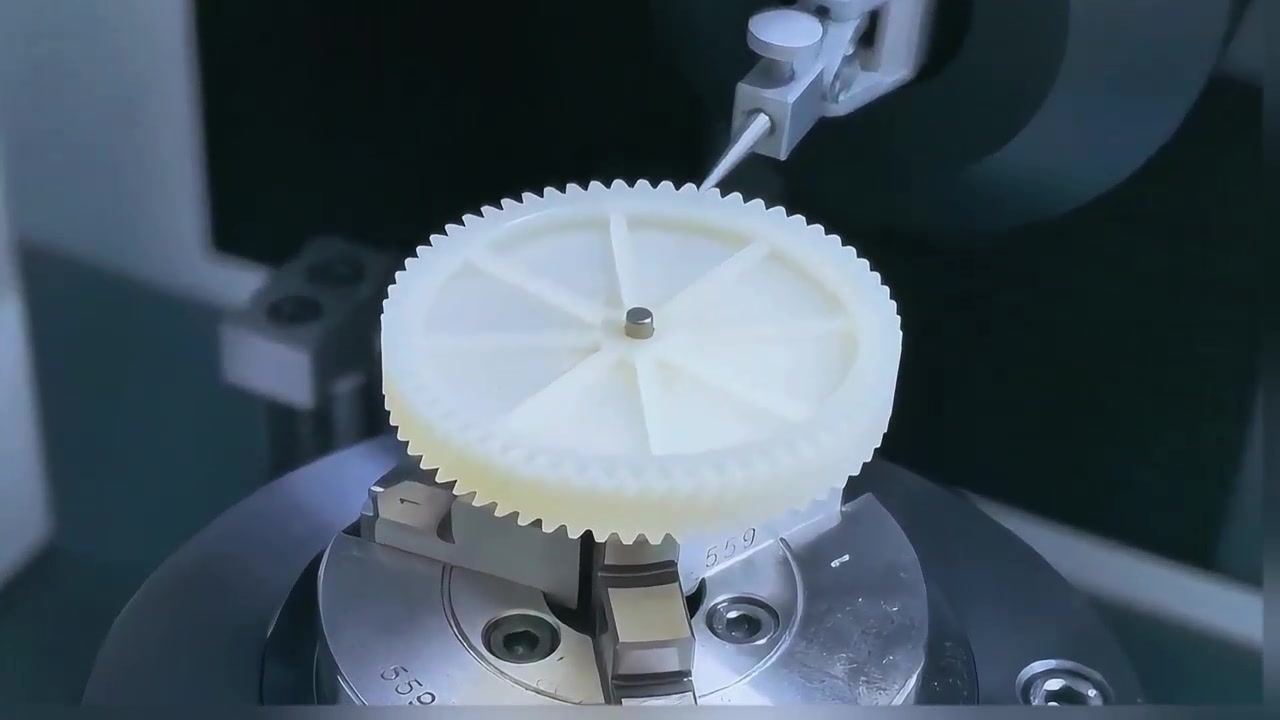
Cavity dimensional accuracy directly determines gear tooth profile accuracy. UNITECH-GEAR achieves tooth profile tolerances within AGMA Q8-Q10 using: CNC-machined copper electrodes (JIS Grade 0), Charmilles C-axis EDM with Ra 0.3 surface finish, and rigorous CMM verification of every cavity dimension before production release.

2. Material Shrinkage Behavior

Semi-crystalline materials (POM, PA) exhibit anisotropic shrinkage — more in the flow direction than transversely. A POM gear might shrink 2.2% in the flow direction but only 1.8% across the flow. This differential shrinkage distorts tooth profiles if not properly compensated. Amorphous materials (PC, PEI) shrink more isotropically but generally have lower mechanical properties. Understanding and compensating for shrinkage behavior is essential for accurate gears.

3. Environmental Factors

Temperature changes cause thermal expansion (CTE for POM: ~110×10⁻⁶/K, PA66: ~80×10⁻⁶/K). A 40°C temperature swing changes a 50mm gear diameter by approximately 0.2mm. Nylon (PA) is particularly sensitive to moisture absorption — PA66 can absorb 2.5% moisture at saturation, increasing dimensions by 0.5-0.8%. Designs must account for the full operating environment, not just ambient conditions at assembly.

4. Wear Over Time

Plastic gears gradually wear during operation — typically 5-25μm per 1,000 hours depending on load, speed, and material. Proper material selection, compatible lubrication, and conservative load ratings extend service life and maintain accuracy. Accelerated life testing (elevated load, temperature, and speed) validates wear predictions before production release.

5. Manufacturing Consistency

Shot-to-shot variation must be minimized through: stable melt temperature (±3°C), consistent mold temperature, controlled cooling time, and regular mold maintenance. Statistical process control (CpK > 1.33) ensures the vast majority of production falls within specified tolerances.

6. Gear Design Parameters

Module, pressure angle, profile shift coefficient, tooth thickness, and rim thickness all affect how the gear behaves under load. AGMA and JIS standards provide design guidelines, but plastic gears often require empirical tuning based on the specific material and application conditions.